


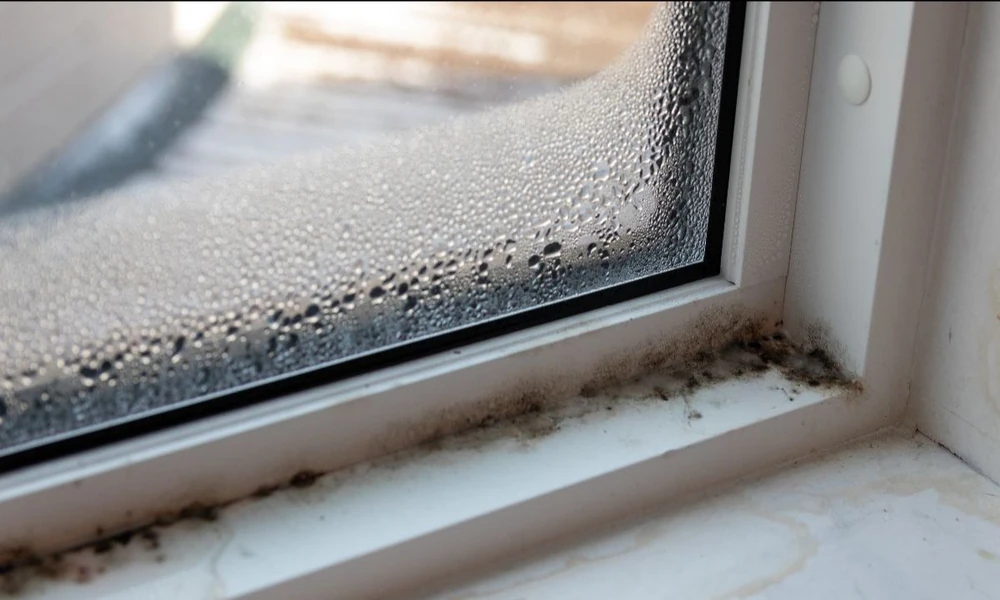
Most homeowners picture mold as a summer problem, something that shows up when the air turns heavy and the basement starts to smell musty. In southeastern Pennsylvania, though, moisture finds a different way into the house almost every season. Frost forms in the attic in January, snowmelt pushes through stone foundations in March, humidity settles into basements in July, and clogged gutters overflow in October. Each season leaves mold in a different corner of the house.
The biology behind it is simple. Mold spores are present in nearly all indoor and outdoor air, and most of the materials a house is built from, including wood, paper-faced drywall, dust, and fabric, give them something to feed on. What keeps spores dormant is dryness. Once a surface stays damp for a day or two, growth can begin, which is why the real work of controlling mold is figuring out where water collects and when.
That detective work is how Darlene Eager approaches the business she runs with her family in Willow Street. Her daughter handles scheduling while her son and son-in-law lead the crews, and their approach to Lancaster County mold restoration starts by explaining what caused the growth before any number goes on paper. The assessment is free, the products they use are chemical free, and the team works directly with insurance adjusters once the homeowner gives the go-ahead. Following the calendar the way an investigator would is a useful way to understand how mold behaves in a local home.
Frost on the Nails Above Your Bedroom
Winter mold usually starts with warm, moist air rising into a cold attic. Showers, cooking, and breathing all add water vapor to indoor air. When that air leaks through recessed lights, attic hatches, and plumbing chases, it meets roof sheathing chilled to outdoor temperatures and condenses. Homeowners sometimes find frost on the tips of roofing nails, followed by dripping on sunny afternoons and a gray or black haze across the north-facing sheathing by spring.
Bathroom exhaust fans that vent into the attic instead of outdoors make the problem much worse, and they’re surprisingly common in older homes and quick renovations. Lower in the house, condensation on single-pane windows soaks wooden sills. Closets built against exterior walls trap cold, damp air behind stored clothing, and a whole-house humidifier set too high can feed all of these spots at once.
Thaw Season Pushes Water Through Stone
When snow melts and spring rain arrives, the ground around a foundation fills with water. Many older homes in the county sit on fieldstone or limestone walls laid with lime mortar, which pass moisture inward far more readily than modern poured concrete. Wooden basement stairs, stored cardboard boxes, and framing for finished walls built tight against the stone soak up that moisture and stay damp for weeks.
Homeowners often confuse efflorescence with mold during this season. Efflorescence is a white, crystalline mineral deposit left behind as water evaporates from masonry. It crumbles to powder when pinched and dissolves in water, while mold looks fuzzy or slimy and smears. Both point to the same moisture problem, but only one is a living organism feeding on the house.
Summer Humidity Moves Indoors
July and August bring dew points that regularly climb into the upper sixties and seventies. When that air drifts into a basement where walls and floors stay naturally cool, relative humidity near those surfaces can rise high enough for growth to take hold without a single leak. The National Pesticide Information Center’s guidance on moisture control and mold suggests keeping indoor humidity between 30 and 50 percent and points out that painting or caulking over existing mold won’t stop it from returning in a humid space.
During this season, mold tends to show up in a handful of predictable places.
- Cold water pipes and toilet tanks that sweat and drip onto subfloors and drywall
- Air conditioner drain pans and condensate lines that clog and overflow
- The back side of furniture and boxes pushed against basement walls
- Crawlspaces with exposed soil and no vapor barrier
- Supply registers where an oversized air conditioner cools the air quickly but removes little moisture
Closing Up the House Locks Moisture In
Autumn feels drier, but it sets up the coming year. Falling leaves fill gutters just as fall storms roll in, and overflowing water runs down siding and pools against the foundation. Windows get shut for the season, which cuts off the natural ventilation that kept a damp basement manageable all summer. Firewood stacked indoors can release a surprising amount of moisture and bring mold spores in with it. Dehumidifiers often get switched off once the air conditioning stops, even though basement humidity usually stays high for several more weeks.
What Proper Remediation Looks Like Behind the Plastic
Once growth goes beyond a small patch, professional cleanup follows a deliberate order. The goal is to remove the mold without spreading spores into clean parts of the house.
- Investigation comes first, using moisture meters and sometimes thermal imaging to find the water source and map how far damp materials extend.
- Containment follows, with plastic sheeting sealing off the work area and negative air machines exhausting filtered air outdoors so spores can’t drift into living spaces.
- Porous materials with heavy growth, such as drywall, insulation, carpet, and ceiling tiles, are cut out, bagged inside the containment, and removed.
- Remaining surfaces are cleaned with HEPA vacuums and damp wiping. Wood framing is often sanded or scrubbed to remove growth from the grain.
- The structure is dried to normal moisture levels with dehumidifiers and air movement, because cleaning a surface that’s still damp only invites regrowth.
- A final inspection, and sometimes air or surface sampling, confirms the area is clean before rebuilding starts.
Skipping any step tends to show up later. A wall rebuilt over damp studs or a containment barrier that leaked can bring the smell and the stains back within months.
Shortcuts That Make the Problem Worse
Bleach is the shortcut most people reach for first. On hard, nonporous surfaces like tile or glass it can remove visible staining. On drywall and wood, though, the water in household bleach soaks in while the chlorine stays near the surface, so growth inside the material survives and often returns. Mixing bleach with ammonia-based cleaners produces toxic gas, which makes the habit riskier still.
Size matters when deciding whether to handle mold yourself. Federal guidance treats an area of roughly ten square feet, about a three-foot-by-three-foot patch, as the general limit for homeowner cleanup. That assumes the moisture source is fixed and no one in the household has asthma, allergies, or a weakened immune system. Anything larger, anything inside wall cavities or ductwork, or any growth that keeps returning calls for a professional assessment.
Testing is another area where expectations often miss the mark. If mold is visible, a lab report rarely changes the plan, since every type gets removed the same way. Sampling is most useful when there’s a smell with no visible source, when someone in the home has unexplained symptoms, or when you want to confirm the work is finished.
Making the Seasons Work for You
The calendar that creates mold also makes it fairly predictable. Checking the attic for frost after the first hard cold snap, watching the basement walls after the thaw, keeping an inexpensive hygrometer downstairs through summer, and cleaning gutters before November storms catches most problems while they’re still small. Insurance tends to favor that kind of attention too. Many policies cover mold only when it results from a sudden, covered water event, while slow leaks and long-term humidity are commonly excluded. A house you watch season by season is one where mold rarely gets the long, quiet head start it needs to cause serious damage.

