


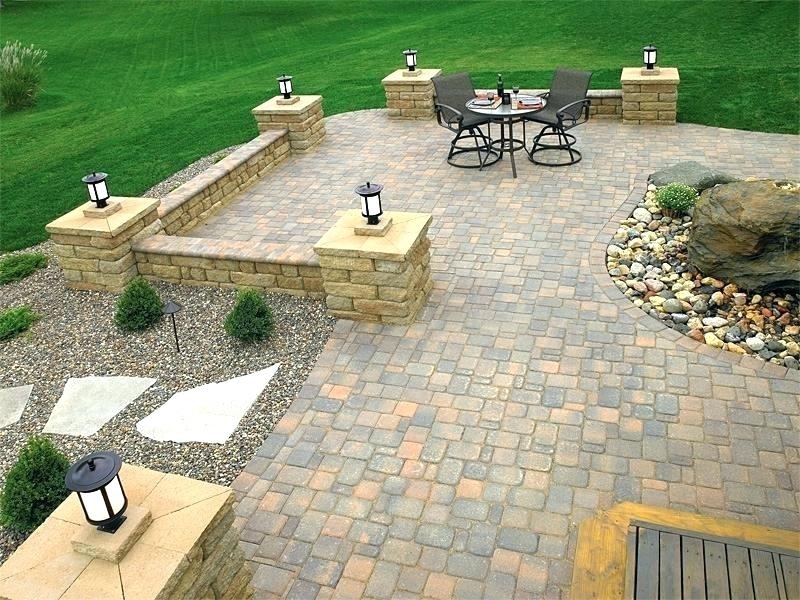
There is no doubt that an elegant way of transforming any garden or outside terrace is to create a patio, and this is increased significantly when you have patios interlocking , which gives a sense of depth to any landscaped feature.
Interlocking patios may be made of stone but it is more usual these days for an artificial material to be used and these can include laminates as well as composite substances which are based on natural materials such as stone or marble.
Wood may also be used to some effect, but as it is a relatively vulnerable material, especially when open to the elements, the use of wood in patios will be in the minority of cases.
Hollow composite decking is often employed in the construction of patios because of its ease of use, and particularly because it can be constructed either on the ground or at any level above ground; this property makes it particularly useful when it comes to building units which are multi-storey and which need to have interconnecting pathways between them. Composite decking can then be used to fulfil this purpose at any height above the ground, and this is quite safe as long as the foundations for anchoring the structure to the ground are robust and strong.
Composites are preferred in patios for a number of reasons. They can be manufactured relatively cheaply and can be embossed with patterns, which means that a pleasant stone effect can be achieved, or any other type of texture which looks natural with a stone appearance. Wood can also be replicated by using composite materials, and in the same way the grain of the wood can be used to help further the appearance of this natural finish.
With patios interlocking you will need to ensure a regimen of structural robustness because of the potential failure that can occur when two patios interconnect in this way. It is actually quite unusual to have patios interlocking in this manner, but this does appear in some housing plans and in certain small office complexes where good communication between buildings has been allowed for.
Patios interlocking in this sense would mean that two or more patios will interconnect at one or more points, and that therefore the points at which they interconnect will need to be strong and resilient to weathering if the connectivity and overall integrity of the whole structure is to be maintained.
The need to maintain patios at least adequately will be part of the design considerations when first considering such structures. There will need to be provisions to easily clean them, as the buildup of dirt may erode the material which holds everything in place. Adequate means of water escape will need to be provided to allow rainfall to egress naturally, as any buildup of water, or of the moisture which results from excess water, may similarly corrode the materials in use. Most interlocking patios will be, for these reasons, well-engineered and built to a high standard in order to last for a long time.

