


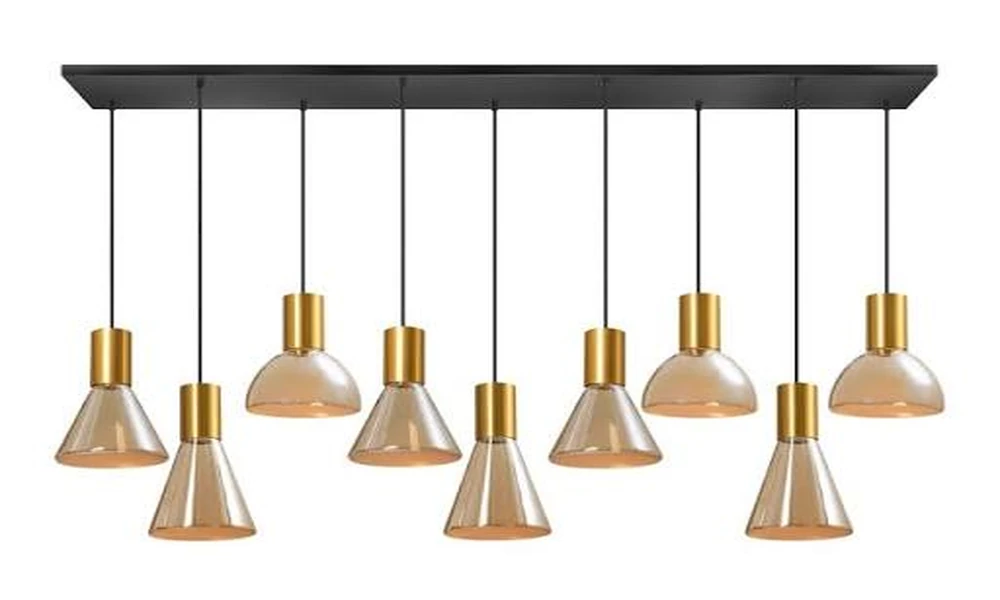
Gold Pendants as Kitchen and Dining Workhorses
Gold pendant lights have earned their position as the most specified pendant finish in residential kitchen and dining design through consistent performance across different design contexts. The warmth that gold and brass tones introduce – before the light is even switched on – coordinates naturally with the wood tones, warm whites, and natural stone materials that have become standard in contemporary kitchen design. The visual weight they provide over an island or dining table anchors the space in a way that cooler finishes rarely achieve as naturally.
The range within the gold pendant category is wide enough to serve different aesthetic intentions. A simple globe pendant in unlacquered brass develops a natural patina that warm and organic; a polished gold geometric pendant is formally glamorous; a matte brass open-cage pendant reads as industrial-adjacent. All are gold, but they produce very different effects in the rooms they inhabit.
Understanding which expression of the gold pendant category fits the specific room requires looking at the room’s other design decisions – the cabinet profile, the countertop material, the overall formality or informality of the space. A polished gold globe pendant in a casual white shaker kitchen reads differently than the same fixture in a formal dark-cabinet kitchen, even though the fixture itself is identical.
Grouping, Spacing, and the Island Application
Gold pendant lights over a kitchen island are almost always installed in groups. The quantity depends on the island length: one pendant for islands up to 4 feet, two for 4 to 6 feet, three for 6 to 8 feet. These quantities provide even light distribution across the surface and visual balance relative to the island’s footprint.
Spacing within the group should be even, with adequate space at each end of the island so the outer pendants do not crowd the corners. The group should be centered on the island, not on the kitchen ceiling, because the island is the visual reference for the pendant arrangement. Ceiling joist locations rarely match the ideal pendant location exactly – using a ceiling medallion can bridge the gap between the junction box location and the pendant’s optimal hanging position.
Height is the third variable in the island pendant installation. The bottom of the pendant should hang 30 to 36 inches above the countertop for the combination of task illumination and visual presence that the fixture type provides. Higher placement reduces illumination effectiveness; lower placement creates an obstruction at the edges of the island.
Energy Star ratings for gold pendant fixtures with LED components confirm efficiency and light output claims – relevant for fixtures providing primary task illumination over work surfaces where accurate color rendering matters.
Mixing Gold Pendants with Other Design Elements
The integration question for gold pendants involves three specific relationships: the finish of adjacent kitchen faucets and hardware, the material and color of the countertop directly below, and the finish of other light fixtures in the connected spaces. Gold pendants coordinate most naturally with warm metal finishes elsewhere in the room – matching faucets in satin or brushed gold, cabinet hardware in the same family – creating a consistent metal language that feels designed rather than accumulated.
Countertop relationships affect how the gold fixture reads. Over white marble with warm gray veining, gold pendants create warmth; over cool gray quartz, the same pendants create contrast. Neither is wrong, but they communicate differently – warmth versus accent. The countertop is the surface most continuously visible below the pendants, and the relationship is prominent enough to be worth considering before installation.
Gold fixtures in open-plan spaces extend their visual influence into connected areas. A gold kitchen pendant that is visible from the adjacent living room needs to coordinate not just with the kitchen but with the light fixture finishes visible from that vantage point. Planning fixture finishes across connected spaces together produces more coherent results than planning each room independently.

